Anúncios
Discover the universe from your own home by learning astronomy online through interactive courses, apps, and virtual observatories that bring the cosmos to your fingertips.
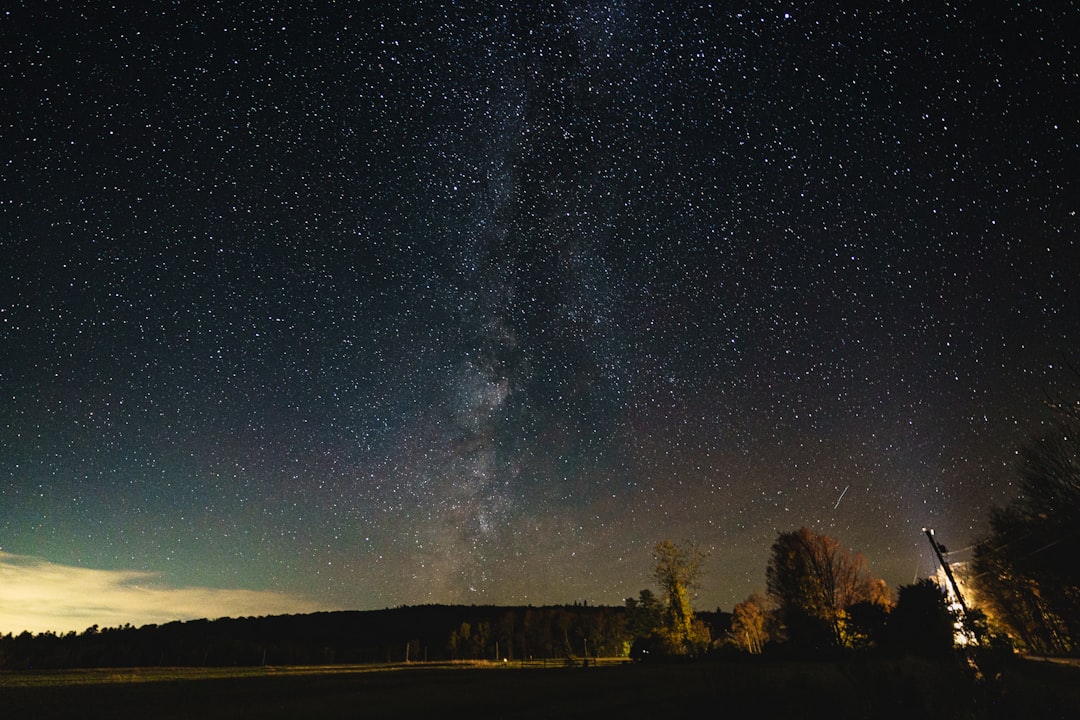
The digital age has transformed how we explore space and celestial phenomena. What once required expensive telescopes and university-level education is now accessible to anyone with an internet connection and curiosity about the stars above.
Whether you’re fascinated by black holes, want to identify constellations, or dream of understanding planetary motion, online astronomy resources offer flexible learning paths tailored to every skill level. From complete beginners to amateur astronomers seeking advanced knowledge, the virtual classroom has opened doors to the universe.
🌟 Why Choose Online Astronomy Education
Learning astronomy through digital platforms offers advantages traditional classroom settings simply cannot match. The flexibility to study at midnight (when celestial observations actually happen) aligns perfectly with the subject matter itself.
Cost-effectiveness stands as one of the primary benefits. Many prestigious universities offer free astronomy courses through platforms like Coursera, edX, and FutureLearn. You gain access to lectures from world-renowned astrophysicists at Harvard, MIT, and Caltech without paying tuition fees.
Online learning removes geographical barriers entirely. A student in rural Brazil can learn from the same professor as someone in downtown Boston. This democratization of knowledge has created a global community of astronomy enthusiasts sharing observations, questions, and discoveries in real-time.
The self-paced nature of digital courses means you can replay complex concepts about redshift, gravitational lensing, or stellar nucleosynthesis until they click. Unlike a traditional lecture hall, you control the speed and can pause to research supplementary material whenever needed.
🎓 Best Platforms for Astronomy Courses
Several dedicated platforms have emerged as leaders in online astronomy education, each offering unique strengths and course structures.
University-Backed MOOCs
Coursera hosts “Astronomy: Exploring Time and Space” from the University of Arizona, a comprehensive introduction covering 14 billion years of cosmic history. The course includes hands-on activities using real astronomical data and interactive simulations that demonstrate concepts like parallax and Doppler shifts.
Duke University’s “Introduction to Astronomy” on Coursera breaks down complex physics into digestible modules. You’ll explore how astronomers measure distances to faraway galaxies and calculate the age of the universe using observable evidence.
edX offers “Greatest Unsolved Mysteries of the Universe” from the Australian National University, diving into dark matter, dark energy, and the search for extraterrestrial life. The course includes virtual lab work analyzing spectroscopic data from actual telescopes.
Specialized Astronomy Websites
The Slooh platform provides something unique: live access to robotic telescopes worldwide. Members can book observation time, capture their own images of nebulae, galaxies, and planets, then share them with the community. The educational component includes guided missions and expert-led shows.
Khan Academy offers free cosmology and astronomy content presented with exceptional clarity. The bite-sized video format works perfectly for learning fundamental concepts like how stars form, why planets orbit, and what determines a star’s color and temperature.

📱 Mobile Apps That Teach Astronomy
Smartphone applications have revolutionized how we learn about the night sky, turning your device into a portable planetarium and educational tool combined.
SkyView Lite uses augmented reality to identify stars, planets, and constellations simply by pointing your phone at the sky. The app includes detailed information about each celestial object, including distance, magnitude, and historical significance. This hands-on learning approach reinforces classroom knowledge with real-world observation.
The app tracks satellite positions in real-time, letting you spot the International Space Station as it passes overhead. Educational notifications alert you to astronomical events like meteor showers, planetary alignments, and lunar eclipses before they happen.
Star Walk 2 adds another layer with time-travel functionality. Scroll forward or backward to see how the sky appeared centuries ago or will look decades from now. This feature brilliantly demonstrates proper motion of stars and precession of Earth’s axis.
NASA App delivers live feeds from the International Space Station, mission updates, and over 16,000 images from various space programs. The educational content includes videos explaining rocket science, planetary geology, and spacecraft engineering in accessible terms.
🔭 Virtual Observatories and Telescope Access
You don’t need to own a telescope to conduct serious astronomical observations anymore. Virtual observatories provide remote access to professional-grade equipment.
The Skynet Robotic Telescope Network, operated by the University of North Carolina, offers free access to students enrolled in participating courses. You submit observation requests online, and the system schedules your session based on weather conditions and telescope availability. Within hours or days, you receive professional images you captured from observatories in Chile, Australia, or North Carolina.
Las Cumbres Observatory runs a global network of telescopes available through educational programs. Students can design research projects, collect original data, and even publish findings. This transforms learning from passive consumption to active scientific participation.
The Virtual Telescope Project broadcasts live astronomical events—eclipses, comet approaches, asteroid flybys—with expert commentary. The interactive chat during events lets viewers ask questions to professional astronomers in real-time, creating an engaging learning environment.
📚 Free Resources Worth Your Time
High-quality astronomy education doesn’t require spending money. Numerous free resources offer university-level content without paywalls or subscription fees.
NASA’s Eyes on the Solar System provides interactive 3D visualization of our cosmic neighborhood. You can pilot spacecraft, visit planets, follow comet trajectories, and watch real NASA missions unfold. The educational value comes from exploring spatial relationships and understanding orbital mechanics through direct manipulation.
The Hubble Legacy Archive contains every observation made by the Hubble Space Telescope since 1990—over 1.5 million observations freely accessible. Educational guides help students analyze this data, teaching both astronomy and data science skills simultaneously.
Crash Course Astronomy on YouTube presents 46 episodes covering everything from basic sky observations to the fate of the universe. Host Phil Plait, a professional astronomer, explains complex topics using humor and clear analogies that make abstract concepts concrete.
| Resource | Best For | Time Commitment |
|---|---|---|
| NASA’s Eyes Software | Visual learners, solar system exploration | Self-paced |
| Crash Course Astronomy | Comprehensive overview | 10-15 min/episode |
| Hubble Legacy Archive | Data analysis, research projects | Variable |
| Stellarium (software) | Sky simulation, planning observations | Self-paced |
🌌 Building a Structured Learning Path
Random exploration has value, but structured learning produces deeper understanding. Here’s how to build a progressive curriculum using online resources.
Beginner Stage: Foundations
Start with naked-eye astronomy. Learn to identify major constellations, understand why stars appear to move across the sky, and recognize planets versus stars. Apps like SkyView make this accessible even from light-polluted cities.
Take an introductory MOOC that covers basic concepts: light-years as distance measurements, spectroscopy basics, the electromagnetic spectrum, and how telescopes work. Understanding these fundamentals prevents confusion when tackling advanced topics later.
Spend time with Stellarium, the free planetarium software. Practice locating objects, understanding celestial coordinates (right ascension and declination), and predicting celestial events. This builds spatial reasoning crucial for astronomy.
Intermediate Stage: Specialized Knowledge
Choose a specialization area that excites you: planetary science, stellar evolution, cosmology, or exoplanet research. Deep-dive courses on platforms like edX offer focused study in these subfields.
Start working with real astronomical data. Projects like Galaxy Zoo, Planet Hunters, and Supernova Hunters let you contribute to actual research while learning classification techniques. You’ll develop skills in pattern recognition and data interpretation.
Join online astronomy communities on Reddit (r/Astronomy, r/Astrophotography), CloudyNights forums, or Stargazers Lounge. Discussing observations and questions with experienced astronomers accelerates learning through peer teaching.
Advanced Stage: Research and Analysis
Tackle courses covering mathematical astronomy: orbital mechanics, stellar structure equations, and cosmological calculations. MIT OpenCourseWare offers graduate-level astrophysics materials freely available.
Design and execute your own research project using virtual telescope access. Study variable stars, asteroid rotation rates, or exoplanet transits. Document your methodology and results as if preparing for publication.
Consider certificate programs from institutions like the University of Edinburgh or Australian National University. While some charge fees, they provide structured capstone projects and official credentials demonstrating your expertise.
💡 Practical Tips for Effective Online Learning
Succeeding in online astronomy education requires different strategies than traditional classroom learning. These approaches maximize retention and understanding.
Create a dedicated study schedule. Astronomy courses often include time-sensitive elements like virtual lab access or live observation events. Block specific times weekly and treat them with the same commitment as in-person classes.
Maintain a learning journal documenting new concepts, questions, and observations. Writing reinforces memory, and reviewing past entries reveals how your understanding evolves. Include sketches of constellations you’ve learned or diagrams explaining complex processes.
Supplement video lectures with textbooks. Many classic astronomy textbooks exist in earlier editions available free online. “Astronomy: Principles and Practice” by Roy and Clarke provides rigorous mathematical treatment; “Cosmos” by Carl Sagan offers philosophical context and inspiration.
Build or join a virtual study group. Many course platforms include discussion forums, but creating a dedicated group on Discord or WhatsApp enables more personal interaction. Teaching concepts to peers solidifies your own understanding.
Balance theory with observation. After learning about stellar evolution, go outside and observe stars at different life stages: blue giants, red supergiants, white dwarfs in binary systems. Connecting textbook knowledge to visible reality transforms abstract information into lived experience.
🚀 From Hobbyist to Contributor
Online astronomy education can launch you beyond passive learning into active contribution to scientific knowledge—a remarkable feature unique to this field.
Citizen science projects desperately need human pattern recognition skills. Planet Hunters has discovered multiple exoplanets through volunteer classifications. Radio Galaxy Zoo maps supermassive black holes using data human eyes process better than algorithms. Your classifications, even as a beginner, contribute to peer-reviewed research.
Amateur astronomers regularly discover supernovae, comets, and asteroids. After building skills through online courses, some learners invest in modest equipment and join networks like the American Association of Variable Star Observers (AAVSO), submitting observations used by professional researchers.
The Backyard Worlds: Planet 9 project enlists volunteers to search telescope data for undiscovered objects in our solar system’s outer reaches. Several brown dwarfs have been found this way, with discoverers credited in scientific publications.
You might contribute through astrophotography shared with educational institutions. Schools and planetariums often seek quality images for educational displays. Your photographs of the moon, planets, or deep-sky objects could inspire the next generation of astronomers.
🌠 Overcoming Common Learning Challenges
Every astronomy student encounters obstacles. Recognizing and addressing them prevents frustration from derailing your learning journey.
Mathematical intimidation stops many learners. Astronomy does involve math, but most introductory concepts require only basic algebra. When encountering equations, focus first on understanding what they represent physically before worrying about calculations. Online tools like Wolfram Alpha can handle computation while you concentrate on conceptual understanding.
Information overload happens when exploring the vast universe of available content. Combat this by following structured curricula rather than random article hopping. Complete one course fully before starting another, building knowledge systematically.
Light pollution frustrates learners wanting to observe what they’re studying. Use planetarium software to compensate—it shows what the sky would look like from dark sites. Plan occasional trips to dark-sky locations, turning them into special learning events rather than routine requirements.
Isolation from other learners can make online study feel lonely. Actively participate in course forums, attend virtual astronomy club meetings, or start a local stargazing group advertised through Meetup. Social learning increases motivation and retention.
🎯 Measuring Your Progress
Unlike traditional classes with exams and grades, self-directed online learning requires creating your own benchmarks to track advancement.
Set observable skills goals: “I will identify 20 constellations from memory,” “I will explain stellar nucleosynthesis to someone with no science background,” or “I will photograph the Andromeda Galaxy.” These concrete targets provide clear success indicators.
Maintain a personal astronomy database documenting every celestial object you’ve observed, photographed, or studied in depth. Watch this collection grow from a handful of planets and the moon to dozens of deep-sky objects, variable stars, and asteroids.
Test comprehension by teaching others. Start a blog explaining astronomical concepts, create YouTube videos demonstrating telescope use, or volunteer at a local science center. Teaching reveals gaps in understanding faster than any exam.
Challenge yourself with astronomy leagues and competitions. Organizations like the Astronomical League offer observing programs with certificates for completing observation lists. The National Science Bowl and similar competitions test knowledge against defined standards.
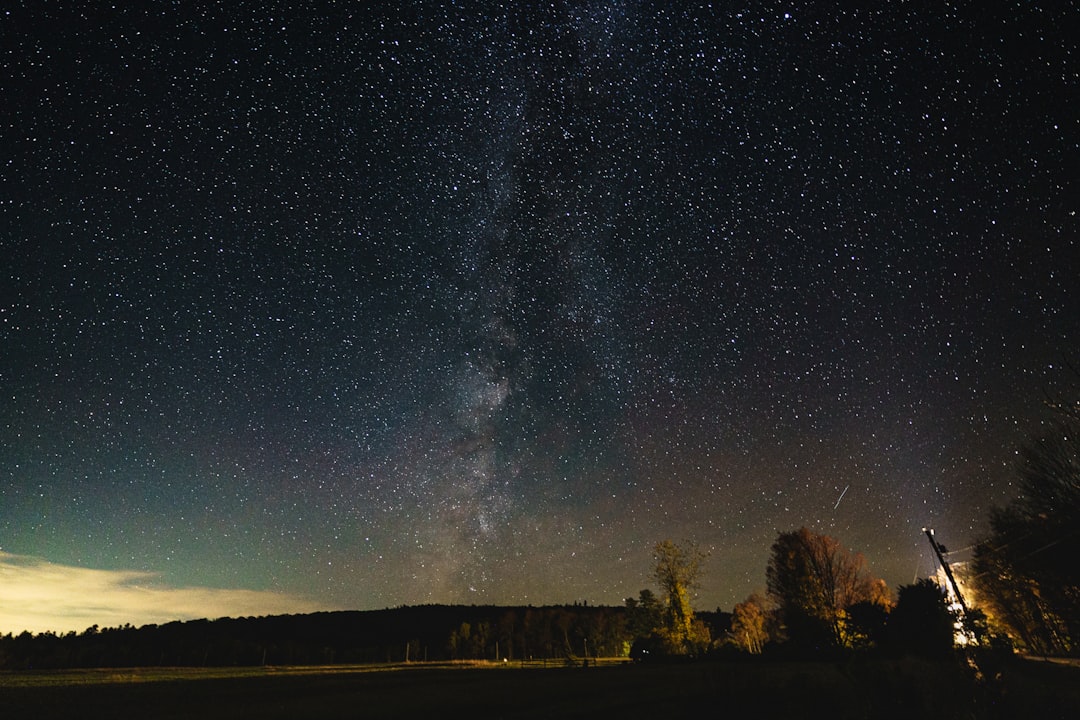
✨ The Endless Universe of Learning
Online astronomy education never truly ends because the field constantly evolves with new discoveries. What you learn today about exoplanets will be supplemented by tomorrow’s findings from the James Webb Space Telescope.
This continuous evolution makes astronomy particularly suited to lifelong online learning. You can follow ArXiv.org to read cutting-edge research papers the day they’re published. NASA and ESA press releases announce discoveries sometimes before they hit mainstream news, letting you stay at the frontier of knowledge.
Your learning path might lead to formal credentials. Several universities now offer complete online degrees in astronomy and astrophysics. What starts as casual curiosity could transform into a second career, teaching position, or planetarium role.
The skills you develop—critical thinking, data analysis, spatial reasoning, and scientific methodology—transfer to countless other fields. Employers value the problem-solving approach astronomy cultivates, making this education professionally valuable beyond the subject itself.
Most importantly, learning astronomy connects you to something profoundly larger than daily concerns. Understanding your place in a universe 93 billion light-years across, 13.8 billion years old, containing two trillion galaxies provides perspective that enriches every aspect of life. That education, freely available through your screen, might be the most valuable of all.
