
Anúncios
The Moon has fascinated humanity for millennia, and now you can explore its cycles from the comfort of your home through innovative digital platforms and resources.


Understanding lunar phases has never been more accessible. Whether you’re a gardening enthusiast, astronomy lover, or simply curious about celestial mechanics, online learning tools offer comprehensive ways to track and comprehend the Moon’s transformative journey through its 29.5-day cycle.
Anúncios
Digital platforms have revolutionized how we interact with astronomical knowledge, providing real-time data, visual representations, and educational content that makes lunar science engaging for everyone from beginners to advanced stargazers.
🌙 Understanding the Basic Moon Phase Cycle
The lunar cycle consists of eight distinct phases that the Moon transitions through as it orbits Earth. Each phase reflects the changing angle between the Sun, Earth, and Moon, creating the visual variations we observe from our planet.
Anúncios
The New Moon marks the beginning of the cycle when the Moon sits between Earth and the Sun. During this phase, the side facing us receives no sunlight, making it invisible to the naked eye. This occurs approximately every 29.5 days and represents a moment of astronomical alignment.
Following the New Moon, the Waxing Crescent appears as a thin sliver of light on the right side (in the Northern Hemisphere). This phase lasts roughly 3.5 days and signals the Moon’s gradual illumination as it moves eastward in its orbit.
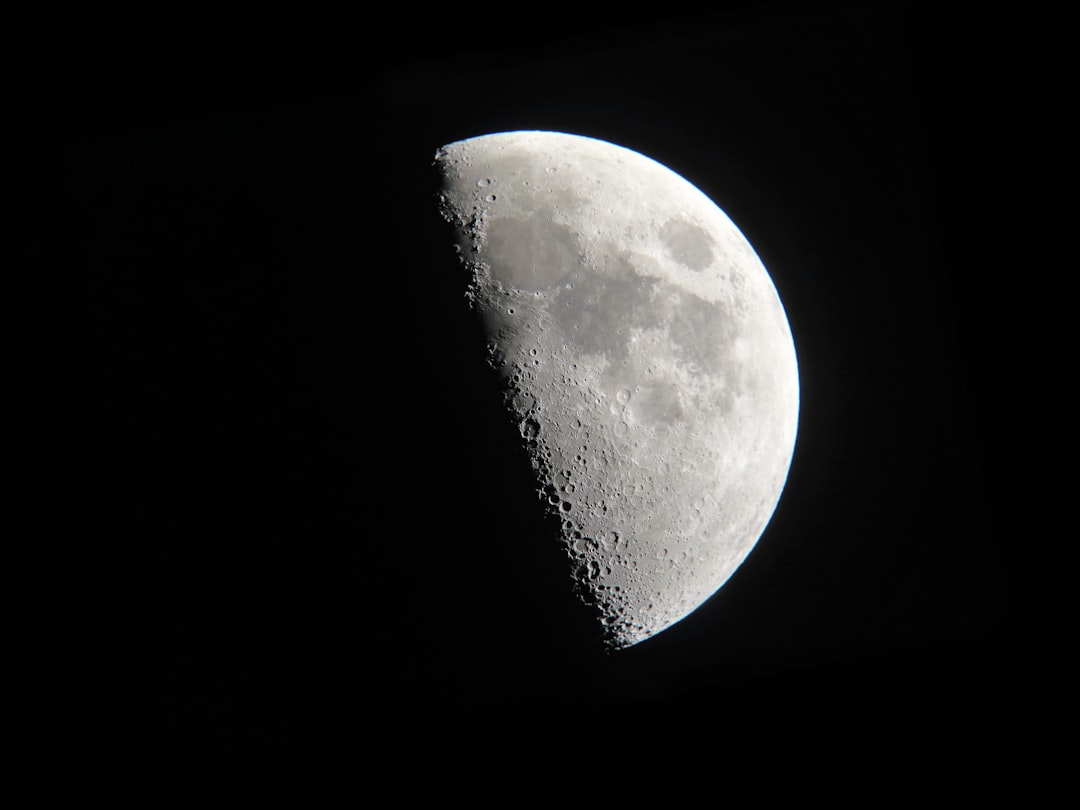
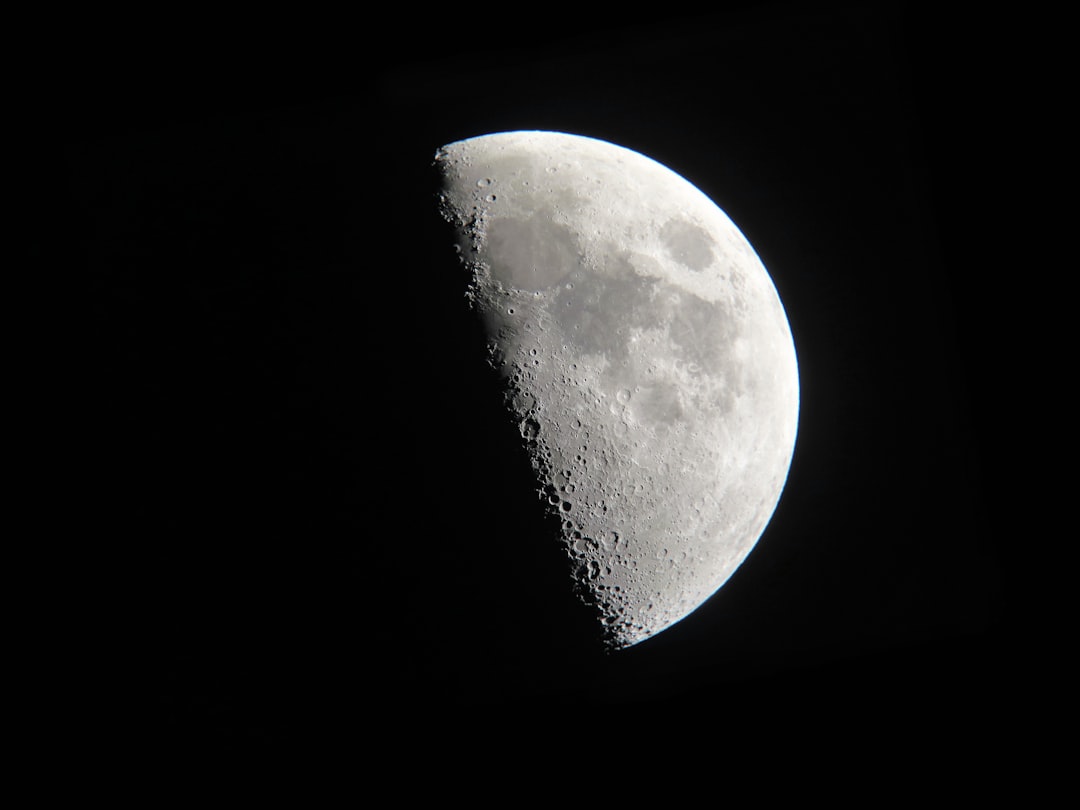
The First Quarter phase occurs when the Moon has completed one-quarter of its orbit. Half of the Moon’s visible surface appears illuminated, creating the distinctive half-moon shape. Many people mistakenly call this a “half moon,” but astronomers refer to it as a quarter phase based on orbital position rather than visible illumination.
During the Waxing Gibbous phase, more than half but not all of the Moon’s surface appears lit. The word “gibbous” comes from Latin meaning “hump,” describing the bulging illuminated portion. This phase builds anticipation for the upcoming Full Moon.
The Full Moon and Waning Phases
The Full Moon represents the cycle’s midpoint when Earth sits between the Sun and Moon. The entire visible surface reflects sunlight, creating the brilliant circular disk we associate with classic Moon imagery. Full Moons occur approximately 14.75 days after each New Moon.
After reaching full illumination, the Moon enters its waning stages. The Waning Gibbous phase shows diminishing light as the Moon continues its orbit. The illuminated portion shrinks from right to left in the Northern Hemisphere.
The Last Quarter (or Third Quarter) mirrors the First Quarter but with opposite illumination. The left half appears lit in the Northern Hemisphere, marking three-quarters completion of the lunar cycle.
Finally, the Waning Crescent displays a thin slice of light on the left side before returning to the New Moon phase, completing the cycle and beginning anew.
📱 Best Online Platforms for Learning Lunar Phases
Modern technology offers numerous ways to study Moon phases through interactive websites, mobile applications, and educational platforms. These tools transform abstract astronomical concepts into tangible, visual experiences.
Mobile applications provide the most convenient access to real-time lunar data. Dedicated Moon phase apps display current phase information, upcoming transitions, and detailed astronomical data including moonrise and moonset times, illumination percentages, and distance from Earth.
These applications often include calendar integration, allowing you to plan activities around specific lunar phases. Features typically include notifications for Full and New Moons, lunar eclipse predictions, and historical phase data.
Interactive websites such as timeanddate.com and moongiant.com offer browser-based lunar calendars with customizable location settings. These platforms provide monthly views showing phase transitions and allow users to explore past and future lunar cycles.
NASA’s official website hosts comprehensive educational resources explaining the science behind lunar phases. Their visualization tools include animations demonstrating how the Moon’s position relative to Earth and the Sun creates each phase we observe.
Virtual Planetariums and Astronomy Software
Desktop applications like Stellarium and SkySafari simulate the night sky with remarkable accuracy. These programs display real-time positions of celestial objects, including detailed Moon phase renderings based on your geographic location.
Users can manipulate time controls to watch the Moon transition through phases in accelerated motion, providing intuitive understanding of the orbital mechanics underlying each transformation. These tools often include informational overlays explaining the astronomical phenomena occurring at any given moment.
🌱 Practical Applications of Moon Phase Knowledge
Understanding lunar cycles extends far beyond academic interest. Many people apply this knowledge to optimize various activities and align practices with natural rhythms.
Gardening by lunar phases represents one of the oldest applications of Moon knowledge. Traditional agricultural wisdom suggests planting above-ground crops during waxing phases when moonlight increases nightly, while root vegetables benefit from planting during waning phases.
The Full Moon period allegedly promotes leaf growth due to increased light and gravitational pull affecting moisture in soil. While scientific validation remains debated, countless gardeners report success following these principles passed through generations.
Fishing enthusiasts often plan trips around lunar phases, particularly New and Full Moons. The gravitational effects creating stronger tides during these phases theoretically trigger increased fish activity and feeding behavior.
Many fishing apps and websites incorporate Moon phase data alongside weather forecasts and tidal charts, creating comprehensive planning tools for anglers seeking optimal conditions.
Photography and Outdoor Activities
Astrophotographers meticulously track lunar phases to plan shoots. New Moon periods offer dark skies ideal for capturing deep-sky objects like galaxies and nebulae, while Full Moons provide opportunities for stunning lunar surface photography.
The “golden hour” combined with specific Moon phases creates dramatic landscape photography opportunities. Photographers use apps to predict moonrise and moonset times relative to sunset, positioning themselves to capture the Moon in compositional relationship with terrestrial subjects.
Outdoor recreation benefits from Moon phase awareness. Campers planning wilderness trips during Full Moon periods enjoy extended natural illumination for evening activities. Conversely, those seeking pristine stargazing conditions avoid Full Moon weekends.
Night hikers and trail runners often prefer waxing gibbous through waning gibbous phases, when substantial moonlight illuminates paths without requiring artificial light sources.
🔭 The Science Behind Lunar Phase Transitions
The Moon’s phases result from its orbit around Earth combined with the Sun’s illumination. Understanding the geometric relationship between these three bodies reveals why we observe specific patterns.
The Moon orbits Earth at an average distance of 238,855 miles (384,400 kilometers), completing one revolution approximately every 27.3 days. However, the synodic month—the period between identical phases—lasts 29.5 days because Earth simultaneously orbits the Sun.
This means the Moon must travel slightly beyond one complete orbit to return to the same phase relative to the Sun’s position. The extra 2.2 days account for Earth’s movement along its solar orbit during the Moon’s revolution.
Illumination Geometry and Phase Angles
The phase angle refers to the angle between the Sun, Moon, and observer (you on Earth). At New Moon, this angle approaches zero degrees—the Sun, Moon, and Earth align with the Moon in the middle. At Full Moon, the angle reaches 180 degrees with Earth positioned between the Sun and Moon.
Quarter phases occur at 90-degree and 270-degree phase angles, creating the half-illuminated appearance. The gradual transition through crescent and gibbous phases reflects the continuously changing angle as the Moon orbits.
Online astronomy tools often include diagrams showing these geometric relationships. Interactive models allow users to manipulate viewing angles, demonstrating how the same hemisphere of the Moon always faces Earth due to synchronous rotation—the Moon’s rotational period matches its orbital period.
📊 Tracking Lunar Cycles Through Digital Tools
Digital tracking tools offer features beyond simple phase display, providing data that enriches understanding and supports practical applications.
| Feature | Practical Benefit | Common Uses |
|---|---|---|
| Illumination Percentage | Precise measurement of visible lunar surface | Photography planning, astronomy observations |
| Moonrise/Moonset Times | Predicts when Moon appears above horizon | Landscape photography, evening activity planning |
| Distance from Earth | Tracks perigee and apogee cycles | Understanding supermoons, tidal variations |
| Zodiac Position | Shows Moon’s location relative to constellations | Astrology interest, astronomical education |
| Eclipse Predictions | Forecasts lunar and solar eclipse events | Event planning, scientific observation |
Advanced applications calculate the Moon’s age—the number of days elapsed since the last New Moon. This measurement helps predict upcoming phase transitions and understand where the Moon sits within its current cycle.
Many tools display the lunar libration, the slight wobbling motion that allows us to see approximately 59% of the Moon’s surface over time rather than exactly 50%. This phenomenon occurs due to the Moon’s elliptical orbit and axial tilt.
Customization and Location-Based Data
Quality lunar applications adjust calculations based on your geographic coordinates. Moonrise and moonset times vary significantly with latitude and longitude, making location-specific data crucial for planning.
Northern and Southern Hemisphere observers see the Moon with opposite orientations. A waxing crescent appears illuminated on the right side for Northern observers but on the left for those south of the equator. Digital tools often include hemisphere selection to display appropriate visual representations.
🌍 Cultural Significance and Lunar Calendars
Numerous cultures organize time around lunar cycles, creating calendars that mark months by Moon phases rather than solar years. Learning about these systems online provides fascinating cultural and historical insights.
The Islamic calendar follows a purely lunar system with 12 months of 29 or 30 days, creating a 354-day year approximately 11 days shorter than the solar year. This causes Islamic holidays to shift through seasons over a 33-year cycle.
The Hebrew calendar employs a lunisolar system, adding periodic leap months to align lunar months with the solar year. This ensures holidays occur in appropriate seasons while maintaining connection to lunar phases.
Traditional Chinese calendar conventions similarly blend lunar and solar elements. The Chinese New Year occurs on the second New Moon after the winter solstice, falling between January 21 and February 20 on the Gregorian calendar.
Full Moon Names and Folklore
Many cultures assigned names to Full Moons occurring in different months, reflecting seasonal activities and natural phenomena. North American indigenous traditions include names like Harvest Moon (September), Hunter’s Moon (October), and Wolf Moon (January).
Online resources catalog these traditional names alongside their cultural origins and meanings. Learning these designations connects modern lunar observation to ancestral knowledge and seasonal awareness.
The Harvest Moon—the Full Moon nearest the autumn equinox—rises close to sunset for several consecutive evenings, providing extended twilight historically valuable for farmers completing harvests.
🎓 Educational Resources for Deep Lunar Learning
Beyond basic phase tracking, numerous online educational platforms offer comprehensive courses and materials exploring lunar science in depth.
Coursera and edX host astronomy courses from leading universities covering celestial mechanics, including detailed modules on lunar phases, orbital dynamics, and tidal effects. These courses often include video lectures, interactive quizzes, and community discussion forums.
YouTube channels dedicated to astronomy provide free visual explanations of lunar phenomena. Channels like NASA’s official account, Fraser Cain’s Universe Today, and SciShow Space regularly publish content explaining Moon phases, eclipses, and related topics.
Virtual observatory programs allow students and enthusiasts to access professional-grade telescopic imagery. Projects like the Virtual Telescope Project stream live lunar observations during significant events like eclipses or supermoons.
Interactive Simulations and Models
PhET Interactive Simulations from the University of Colorado Boulder offers a free “Lunar Lander” simulation demonstrating gravitational effects and orbital mechanics. While focused on landing scenarios, it reinforces understanding of the Moon’s physical properties.
The “Moon Phases” simulation from the same platform allows users to manipulate the Sun-Earth-Moon system geometry, directly observing how different positions create various phases. This hands-on approach solidifies conceptual understanding more effectively than static diagrams.
⏰ Syncing Your Life with Lunar Rhythms
Many people find value in aligning certain activities and planning cycles with lunar phases, whether for practical reasons or personal preference.
Wellness practices often incorporate lunar awareness. Some practitioners suggest setting intentions during New Moons (symbolizing new beginnings) and releasing habits or goals during Full Moons (representing completion and culmination).
While scientific evidence for biological effects remains limited, the psychological benefit of structured reflection periods linked to observable celestial events provides many people with valuable mindfulness practices.
Business planning occasionally integrates lunar cycles, particularly in industries with historical connections to Moon phases like fishing, agriculture, and hospitality. Some businesses schedule product launches or marketing campaigns around significant lunar events to capture cultural attention.
Digital calendars can integrate lunar phase overlays, displaying current and upcoming phases alongside conventional appointments and deadlines. This integration helps maintain awareness without requiring separate tracking tools.
🔍 Advanced Features in Lunar Tracking Applications
Premium lunar applications offer sophisticated features for serious enthusiasts and professionals requiring detailed astronomical data.
Augmented reality modes overlay lunar information on smartphone camera views, allowing users to point their devices at the sky and see the Moon’s position, phase, and trajectory even when obscured by clouds or daylight.
These AR features often extend to showing the Moon’s position at different times, helping photographers preview where the Moon will appear relative to landscape features hours before actual moonrise.
Historical phase data lets users explore lunar phases for any date in history or future. This capability serves genealogists investigating birth dates, historians researching historical events, and anyone curious about lunar conditions during significant personal moments.
Some applications include notification customization, alerting users to specific phases or astronomical events. You might set alerts for Full Moons only, or receive notifications when the Moon reaches specific illumination percentages relevant to your activities.
Integration with Other Astronomical Events
Comprehensive astronomy apps combine lunar phase tracking with broader celestial event calendars. These platforms notify users about meteor showers (noting whether Moon phase will interfere with viewing), planetary conjunctions, and International Space Station passes.
Understanding how Moon phases affect other astronomical observations enhances overall stargazing experiences. A bright Full Moon washes out faint meteors and deep-sky objects, while New Moon periods provide optimal dark-sky conditions.
🌟 Making Moon Phase Learning a Regular Practice
Transforming lunar awareness from occasional curiosity into consistent practice yields deeper understanding and appreciation over time.
Begin by simply checking the current phase daily through your chosen app or website. Notice how the Moon appears in the sky each evening and correlate those observations with the technical phase designation. This practice builds intuitive recognition over several months.
Create a lunar journal documenting observations, photographs, or simply notes about the Moon’s appearance and your activities during different phases. Over time, patterns may emerge in your energy levels, sleep quality, or other personal factors you choose to track.
Join online astronomy communities where enthusiasts share lunar photography, discuss upcoming events, and exchange knowledge. Platforms like Reddit’s r/astronomy, CloudyNights forums, and astronomy-focused Facebook groups provide supportive environments for learners at all levels.
Set monthly Moon-watching appointments with yourself or friends. Dedicate time during each Full Moon to observe, photograph, or simply appreciate the lunar display. These regular touchpoints deepen your connection to celestial cycles and create memorable experiences.
The accessibility of online lunar resources means anyone with internet access can become fluent in Moon phases regardless of prior knowledge or equipment. Whether your interest stems from practical applications, scientific curiosity, or simple wonder at celestial beauty, digital tools provide pathways to meaningful engagement with our nearest cosmic neighbor. The combination of real-time data, educational content, and visual representations transforms ancient astronomical knowledge into an immediate, personal experience available at your fingertips.
