Anúncios
Astrophotography has become more accessible than ever, and learning online opens up a universe of possibilities for capturing stunning images of the night sky from your own backyard.


The digital age has transformed how aspiring astrophotographers learn their craft. Instead of expensive workshops or college courses, you can now master the art of capturing celestial objects through comprehensive online resources, interactive communities, and practical tutorials that fit your schedule and budget.
Anúncios
Whether you’re dreaming of photographing the Milky Way, tracking deep-sky objects, or documenting lunar phases, online learning platforms offer structured pathways from beginner fundamentals to advanced image processing techniques. The best part? You can practice immediately with equipment you might already own.
🌟 Why Choose Online Learning for Astrophotography
Traditional astrophotography education often required joining astronomy clubs or attending in-person workshops with limited availability. Online learning has demolished these barriers, creating opportunities for anyone with internet access to develop professional-level skills.
Anúncios
The flexibility of online astrophotography courses means you can learn during daylight hours and practice during clear nights. Most platforms offer lifetime access to course materials, allowing you to revisit complex topics like image stacking or calibration frames whenever needed.
Cost savings represent another significant advantage. Where a weekend workshop might cost $500-1000 plus travel expenses, comprehensive online courses typically range from $50-300 with far more content. Many YouTube channels and astronomy websites even provide free tutorials covering fundamental concepts.
The global community aspect enriches online learning dramatically. Students share their images, troubleshoot equipment issues together, and provide location-specific advice about dealing with light pollution or weather conditions. This collaborative environment accelerates learning beyond what any single instructor could provide.
📚 Essential Topics Covered in Online Astrophotography Courses
Quality online astrophotography education covers both the technical and artistic dimensions of the craft. Understanding what to expect helps you choose the right learning path for your goals and current skill level.
Camera Settings and Equipment Fundamentals
Beginner modules typically start with camera basics specific to night photography. You’ll learn why manual mode is essential, how ISO sensitivity affects noise levels in dark conditions, and why shutter speed determines whether stars appear as points or trails.
Aperture settings get special attention since capturing faint celestial objects requires maximizing light intake. Most courses explain the relationship between f-stops and depth of field, teaching you when to shoot wide open at f/2.8 versus stopping down to f/4 for sharper stars.
Equipment discussions cover everything from entry-level DSLRs to dedicated astronomy cameras. You’ll discover that smartphone astrophotography has genuine applications for bright targets like the Moon, while deep-sky imaging requires specialized cooled sensors.
Planning Your Imaging Sessions
Successful astrophotography depends heavily on preparation. Online courses teach you to use planetarium software like Stellarium or SkySafari to predict when targets reach optimal altitude above your horizon.
Moon phase planning becomes second nature as you learn how even a thin crescent can wash out faint nebulae. Weather forecasting tools specific to astronomy—checking not just clouds but atmospheric transparency and seeing conditions—transform from confusing jargon into practical skills.
Light pollution assessment represents a critical topic. Courses explain the Bortle scale and teach you to find dark-sky locations using light pollution maps. Many instructors share techniques for shooting from urban environments when travel isn’t possible.
Image Acquisition Techniques
This forms the heart of practical astrophotography education. You’ll master the concept of exposure time—why single 5-minute exposures often fail while stacking 50 shorter exposures succeeds brilliantly.
Calibration frames (darks, flats, and bias frames) mystify beginners but become straightforward through clear demonstrations. Online courses show exactly how these frames eliminate sensor noise, vignetting, and dust shadows from your final images.
Tracking methods receive thorough coverage, from simple barn-door trackers costing $100 to computerized equatorial mounts exceeding $2000. You’ll learn the Earth’s rotation rate and why even 30-second exposures show star trails without tracking.

Post-Processing and Image Stacking
Raw astrophotography data looks disappointingly dim and noisy—post-processing transforms these files into stunning images. Online tutorials demystify software like PixInsight, DeepSkyStacker, and Adobe Photoshop adaptations for astronomical images.
Stacking workflows get broken down into digestible steps. You’ll learn how software aligns dozens or hundreds of frames, then averages them to reveal details invisible in any single exposure. The mathematics behind signal-to-noise ratio improvement becomes intuitive through visual examples.
Stretching techniques—carefully brightening faint nebulosity without blowing out star cores—separate amateur snapshots from publication-quality images. Courses teach histogram manipulation, curves adjustments, and selective processing that brings out both bright and dim regions.
🔭 Choosing the Right Online Learning Platform
Dozens of platforms offer astrophotography instruction, each with distinct strengths. Your choice should align with your learning style, budget, and specific interests within this diverse hobby.
Structured Course Platforms
Sites like Udemy, Skillshare, and specialized astronomy platforms host comprehensive courses with organized curricula. These typically include 20-50 video lessons, downloadable resources, and sometimes sample image files for practice processing.
Look for instructors who actively shoot astrophotography and share recent work. Course reviews reveal whether instruction matches your level—some courses labeled “beginner” assume significant photography knowledge, while others truly start from zero.
Update frequency matters significantly in astrophotography education. Software evolves rapidly, and techniques improve continuously. Courses updated within the past 18 months typically reflect current best practices and compatible software versions.
YouTube Channels and Free Resources
Several astrophotographers maintain exceptional YouTube channels with hundreds of free tutorials. AstroBackyard, Nebula Photos, and Cuiv the Lazy Geek offer professional-quality instruction covering equipment reviews, technique demonstrations, and processing workflows.
The advantage of YouTube learning lies in visual demonstrations of real-time processes. Watching someone struggle with polar alignment, then succeed, teaches more than static diagrams ever could. Comment sections often contain additional tips from experienced imagers.
Free resources do require more self-direction. You’ll need to create your own learning pathway rather than following a structured curriculum. Many learners combine free YouTube tutorials with a single comprehensive paid course for systematic foundation-building.
Community-Based Learning
Forums like Cloudy Nights and the r/astrophotography subreddit function as continuous learning environments. Posting your images for constructive criticism—known as “astro critique”—accelerates improvement faster than solitary learning.
These communities organize collaborative projects like imaging the same target during specific time windows, then comparing techniques and results. Seeing ten different processing approaches applied to identical raw data reveals just how creative astrophotography can be.
Discord servers and Facebook groups focused on specific equipment brands or techniques offer real-time troubleshooting. When your mount refuses to connect at 2 AM before a clear night, these communities provide immediate assistance traditional courses cannot match.
🎯 Building Your Practical Skills Through Online Challenges
Knowledge without application remains theoretical. The best online learning programs incorporate practical assignments that force you to apply concepts under real night-sky conditions.
Progressive Challenge Structure
Effective courses start with achievable targets like the Moon or bright star clusters. These forgiving subjects let you master camera settings and focusing techniques before attempting faint galaxies that punish any mistake.
Monthly challenges posted by online communities motivate consistent practice. “Wide-field Milky Way panoramas” one month and “Jupiter with moons” the next ensure you develop diverse skills rather than repeatedly shooting familiar targets.
Processing challenges using provided raw data eliminate equipment and weather as variables. You download the same sub-frames as dozens of other learners, then compare your processed result. This reveals whether your workflow needs refinement or if you’re truly mastering the craft.
Creating Your Astrophotography Portfolio
Online platforms make sharing work effortless, and building a portfolio serves multiple learning purposes. AstroBin and similar sites host your images with embedded EXIF data showing exact equipment and settings used.
Documenting your progression from first blurry Moon shot to detailed nebula images provides motivation during the inevitable frustrating nights. Many learners create annual “year in review” posts showing dramatic improvement that inspires continued dedication.
Engaging with feedback—both giving and receiving—develops your critical eye faster than solitary work. Learning to articulate what makes an image successful or how composition could improve deepens your understanding of aesthetic principles.
💡 Advanced Topics and Specialization Paths
Once fundamentals become comfortable, online learning enables specialization in specific astrophotography niches. Each requires distinct equipment and techniques best learned from practitioners focused on that specialty.
Deep-Sky Imaging with Narrowband Filters
Capturing emission nebulae through narrowband filters (Hydrogen-alpha, Oxygen-III, Sulfur-II) represents an advanced technique that defeats light pollution. Specialized online courses teach the Hubble Palette and other false-color mapping techniques.
These courses explain filter physics—why 3nm bandpass filters cost $300+ while general “light pollution filters” cost $100. You’ll learn integration time requirements (often 10+ hours per target) and master the patience this demanding specialty requires.
Processing narrowband data involves combining monochrome channels into color images, a workflow completely different from standard RGB processing. Online tutorials demonstrate PixInsight’s ChannelCombination tool and Photoshop techniques for achieving pleasing color balance.
Planetary Imaging at High Magnification
Photographing Jupiter’s cloud bands or Saturn’s Cassini Division requires completely different equipment and techniques than deep-sky work. Online planetary imaging courses focus on high-speed video capture and lucky imaging concepts.
You’ll learn why thousands of frames are recorded, then only the sharpest 5-10% stacked. Atmospheric turbulence (“seeing”) becomes your primary challenge, and courses teach timing your sessions when planets reach maximum altitude.
Software like AutoStakkert! and RegiStax receive detailed coverage. Wavelet sharpening—carefully applied—reveals details at the resolution limit of your telescope aperture. Learning to walk the fine line between sharpening and over-processing takes guided practice.
Time-Lapse and Star Trail Photography
Creating videos showing celestial motion combines astrophotography with cinematography skills. Online workshops teach intervalometer settings, ensuring smooth motion between frames when compiled into video.
Star trail images—those circular patterns around Polaris—require specific composition techniques. Courses demonstrate including interesting foreground elements (trees, buildings, landscapes) that contextualize the cosmic motion above.
Post-production in video editing software or specialized tools like StarStaX gets thorough explanation. You’ll learn creating both traditional composite star trails and time-lapse videos that compress hours of sky motion into mesmerizing 30-second clips.
📱 Mobile Apps That Enhance Your Learning
Smartphone applications transform your device into an essential astrophotography companion. Many online courses integrate these tools into their teaching methodology.
Planetarium apps provide real-time sky maps showing exactly which constellations and deep-sky objects occupy your current sky. Apps like SkySafari, Stellarium Mobile, and Star Walk 2 offer augmented reality modes—point your phone skyward and see labels overlay the actual stars.
Specialized apps help with technical challenges. PhotoPills calculates the Milky Way’s position at any date and location, perfect for planning landscape astrophotography compositions. Polar alignment apps use your phone’s camera and accelerometer to achieve precise mount alignment without expensive polar scopes.
Weather-focused apps like Clear Outside provide astronomy-specific forecasts including cloud cover, transparency, and seeing predictions. Learning to interpret these forecasts—understanding that high humidity reduces transparency even under clear skies—comes through practical application.
🌌 Overcoming Common Challenges Through Online Communities
Every astrophotographer encounters frustrating obstacles. Online learning environments excel at helping you troubleshoot problems that would stump solitary learners.
Focus Accuracy in Darkness
Achieving perfect focus on pinpoint stars ranks among the most common struggles. Online resources teach Bahtinov masks, which create diffraction spikes that clearly indicate focus direction. Video tutorials showing real-time focusing sessions demystify this process.
Live focus features in modern cameras get explained in context of astrophotography. You’ll learn how to zoom 10x on a bright star through your camera’s display, making focus verification possible even in complete darkness.
Alternative methods like focus-assist software (BackyardEOS, APT) that graph focus metrics as you adjust help when visual assessment fails. Online communities share target focus positions for specific lens and temperature combinations, giving you starting points.
Dealing with Dew and Condensation
Moisture forming on optics ruins imaging sessions, and online courses address prevention methods. DIY dew heater tutorials using inexpensive components save hundreds versus commercial solutions, and community members share regional experiences about which conditions demand active heating.
Learning to monitor dew point versus ambient temperature becomes second nature. Weather apps showing these values help predict when dew will form, allowing you to wrap up sessions before moisture becomes problematic.
Polar Alignment Precision
Equatorial mount tracking depends on accurate polar alignment—pointing the mount’s axis at the celestial pole. Online video demonstrations clarify what textbook diagrams cannot, showing the iterative process of improvement through drift alignment.
Software-assisted methods like SharpCap’s polar alignment feature get step-by-step tutorials. These modern approaches achieve accuracy in minutes that traditional methods required hours to accomplish, lowering the barrier for beginners.
🚀 Creating Your Personal Learning Roadmap
The abundance of online astrophotography resources can overwhelm newcomers. A structured approach transforms scattered information into a coherent learning journey.
Start with foundation courses covering exposure triangle basics, focusing techniques, and simple tracking methods. Spend at least 5-10 clear nights practicing these fundamentals before advancing to image stacking and processing.
Progress to intermediate topics once you consistently capture sharp, properly exposed frames. Now tackle calibration frames, basic stacking workflows, and introductory processing. This stage typically requires 3-6 months of regular practice.
Advanced specialization should wait until intermediate techniques feel comfortable. Choosing between deep-sky, planetary, or widefield landscape astrophotography lets you focus equipment investments and technique refinement toward specific goals.
Schedule regular skill reviews by reprocessing old data with new techniques. An image you processed six months ago will look dramatically better when reprocessed with improved skills, providing tangible evidence of your growth.
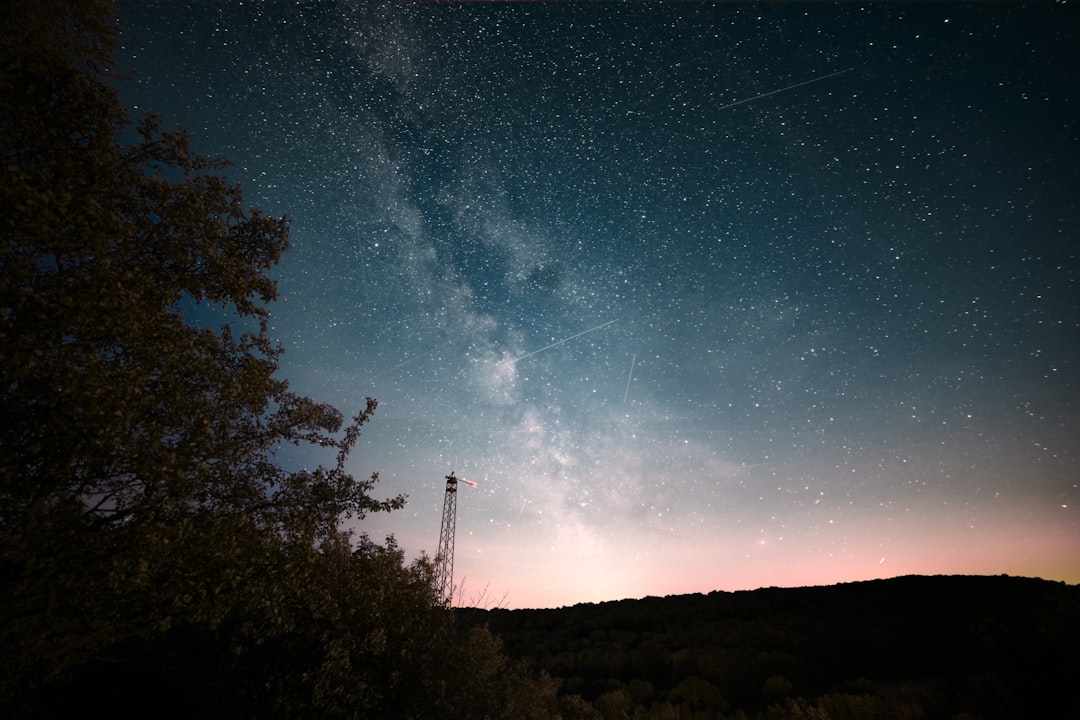
✨ The Future of Your Astrophotography Journey
Online learning provides the knowledge foundation, but your personal dedication determines success in astrophotography. The craft rewards persistence through cloudy weeks, patience during equipment troubleshooting, and continuous curiosity about the cosmos above.
Modern online resources have democratized what was once an exclusive hobby requiring expensive workshops and rare expertise. Anyone with a camera, internet access, and clear skies can now capture images that would have amazed professional astronomers just decades ago.
Your learning never truly completes—each image teaches something new, every clear night presents different challenges, and the astronomical community constantly develops improved techniques. This perpetual growth keeps astrophotography endlessly engaging for those who embrace the journey.
The images you’ll create connect you to something far larger than pixels and processing algorithms. Each photon captured by your sensor traveled years or centuries through space before reaching your equipment. Learning astrophotography online opens your eyes to this cosmic perspective in ways few other hobbies can match.
